Address
304 North Cardinal
St. Dorchester Center, MA 02124
Work Hours
Monday to Friday: 7AM - 7PM
Weekend: 10AM - 5PM
Address
304 North Cardinal
St. Dorchester Center, MA 02124
Work Hours
Monday to Friday: 7AM - 7PM
Weekend: 10AM - 5PM
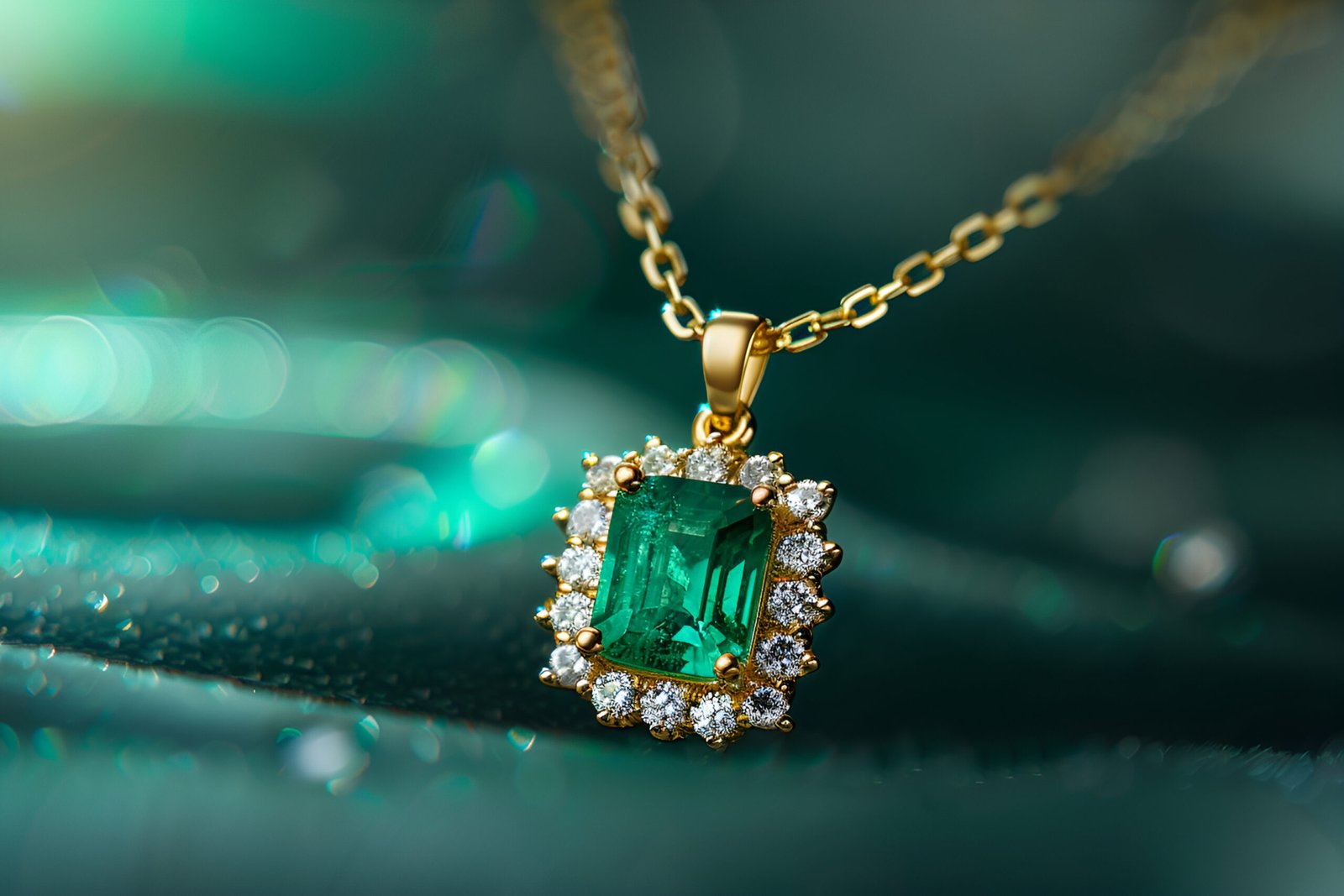
Jewelry is not only an accessory to adorn one’s appearance but also a cultural symbol embodying nature’s gifts and human wisdom. Its origin is like a river spanning time and space, with one end connecting the deep earth, vast oceans, and dense forests, and the other extending to every important node of human civilization. From the gestation of natural raw materials to the carving of artificial craftsmanship, each piece of jewelry has a unique “birth story.”
I. Natural Raw Materials: The Mastery of Nature
The core charm of jewelry stems first from the rarity and preciousness of its natural raw materials. These materials are masterpieces of nature’s evolution over hundreds of millions of years, nurtured under specific geological and hydrological conditions, each with a unique formation environment and distribution of producing areas.
1. Gemstones: Brilliant Crystals from the Depths of the Earth
Gemstones are the most eye-catching category in jewelry, mainly including diamonds, rubies, sapphires, emeralds, jadeite, etc. Diamonds form in the mantle layer 150-200 kilometers below the Earth’s surface. Under extreme conditions of high temperature (1100-1600℃) and high pressure (4.5-6GPa), carbon atoms are closely arranged through covalent bonds to form octahedral crystals, which are then brought to the surface through geological activities such as volcanic eruptions. World-renowned diamond-producing countries include South Africa, Botswana, Russia, Australia, etc. Among them, the Cullinan Mine in South Africa once produced the world’s largest diamond – the Cullinan Diamond (weighing 3106 carats). Rubies and sapphires belong to the corundum family, with alumina as their main component. They exhibit different colors due to different trace elements contained: those containing chromium are red and called rubies, while those containing iron and titanium are blue or other colors (such as yellow, pink) and called sapphires. The Mogok Mine in Myanmar is world-famous for producing “pigeon’s blood” rubies, which are rich and bright in color with superior quality; sapphires are most precious with the “cornflower blue” from Kashmir, which presents a unique velvety luster due to the fine rutile needle-like inclusions inside.
2. Precious Metals: Eternal Value Across Time and Space
Precious metals such as gold, silver, and platinum are important carriers of jewelry. With their good ductility, stability, and scarcity, they have become symbols of wealth and eternity. The formation of gold is related to supernova explosions. Heavy metal elements produced by extreme celestial events such as neutron star collisions in the universe come to Earth through meteorite impacts and are widely distributed in the crust and mantle. Countries with rich gold reserves in the world include South Africa, Australia, Russia, the United States, etc. South Africa once occupied the first place in the world’s gold production for a long time, and its Rand Gold Mine is one of the largest gold mines in the world. Platinum is a more rare precious metal than gold, with an annual output only 1/30 of that of gold. It is mainly produced in South Africa, Russia, and Canada. Its melting point is as high as 1772℃, and it has excellent corrosion resistance and stability, so it is often used to inlay high-end gemstones, symbolizing purity and eternity. Silver is relatively widely distributed, with main producing areas including Peru, Mexico, China, etc. Due to its white color and good ductility, it can be used to make jewelry alone, or often mixed with gold to form “K gold” or used as a setting for gemstones.
3. Organic Jewelry: Warm Gifts from Life
In addition to inorganic gemstones and precious metals, there is a special type of raw material in jewelry – organic jewelry, which comes from the life activities of animals and plants and condenses the vitality and warmth of nature. Pearls are the most representative organic jewelry, formed by pearl oysters, mussels, and other shellfish secreting nacre to wrap foreign objects layer by layer when invaded. According to the different production environments, pearls can be divided into seawater pearls and freshwater pearls. Seawater pearls are most famous for Japanese Akoya pearls, South Sea pearls (produced in the waters of Australia, Indonesia, etc.), and Tahitian black pearls, while freshwater pearls are mainly produced in China. In addition, coral, amber, ivory (now banned from trading due to animal protection) also belong to organic jewelry. Coral is formed by the accumulation of coral polyps’ skeletons, mainly growing in tropical and subtropical seas, with red coral being the most precious; amber is a pine resin fossil from tens of millions of years ago, with high output in the Baltic Sea coast, Myanmar, the Dominican Republic, and other regions. It often contains ancient insects and plant debris inside, which has high collection value.
II. Historical Context: From Practical Tools to Cultural Symbols
1. Ancient Times: Combination of Function and Belief
As early as the late Paleolithic Age, humans began to make simple jewelry. At that time, people used natural materials such as animal teeth, shells, and stones to make necklaces, bracelets, and other ornaments through polishing and drilling, mainly for decoration, warding off evil spirits, or symbolizing identity. For example, in the Peking Man Site at Zhoukoudian, string ornaments made of animal teeth, blood clam shells, bone tubes, etc., were found. These ornaments not only reflect the aesthetic consciousness of ancient humans but also their awe and worship of nature.
2. Ancient Civilizations: Symbols of Power and Status
Entering the era of ancient civilizations, the craftsmanship of jewelry gradually became exquisite and became a symbol of power, status, and wealth. The gold crowns worn by Egyptian pharaohs and necklaces inlaid with colored glass and semi-precious stones demonstrated supreme ruling status; Roman nobles loved to decorate their clothes and jewelry with pearls and gemstones, and pearls even became a symbol of the identity of women in the Roman Empire; emperors and nobles in ancient China valued jade, and “a gentleman does not part with his jade without reason.” Jade ornaments were not only symbols of identity but also carried the Confucian thoughts of “benevolence, righteousness, propriety, wisdom, and trustworthiness.”
3. Modern and Contemporary Times: Expression of Aesthetics and Individuality
With the advent of the Industrial Revolution, the production of jewelry entered the mechanized era, the production efficiency was greatly improved, and jewelry gradually moved from the noble class to the mass market. At the same time, the rise of modern design concepts has made jewelry no longer limited to traditional shapes and meanings, and more emphasis on individuality and artistry. Designers integrate various new materials and processes into jewelry design, such as stainless steel, titanium alloy, enamel, etc., creating works of various styles to meet the aesthetic needs of different groups of people. Today, jewelry has become an important carrier for people to express themselves and convey emotions. Whether it is an engagement ring, a wedding necklace, or daily-worn earrings and bracelets, they all contain unique personal stories.
III. Conclusion: The Eternal Symphony of Nature and Humanity
The origin of jewelry is an epic intertwined with natural evolution and human civilization. It comes from the depths of the earth, the embrace of the ocean, and the secret realm of the forest, carrying the imprint of hundreds of millions of years; it is sublimated in human wisdom and craftsmanship, becoming an art treasure carrying culture, emotion, and value. Each piece of jewelry is a perfect combination of nature’s masterpiece and human ingenuity. It not only shines with the light of material but also condenses human longing and pursuit for a better life, blooming eternal charm in the long river of time.


